Jupiter Embroidery Design Review
First Impressions: Bold, Playful, and Surprisingly Versatile
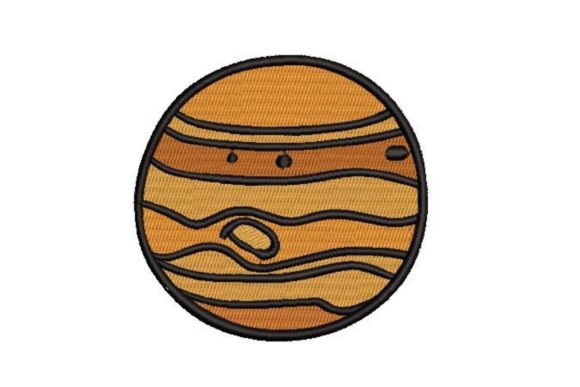
When I first opened the Jupiter embroidery file on Creative Fabrica, I expected a literal planetary rendering—clean circles, soft gradients, maybe some subtle starfield. Instead, I found a stylized, friendly robot interpretation of Jupiter: rounded metallic limbs, expressive circular “eyes,” and a textured, layered body that nods to both cosmic scale and mechanical charm. It’s clearly labeled under Robots, but its personality feels more like a character than a machine—whimsical enough for baby blankets, grounded enough for boutique aprons or craft fair patches. The design uses a balanced mix of satin stitch for smooth contours, fill stitch for dimensional body sections, and subtle running stitch accents for surface detail. At a glance, it reads as confident—not too dense, not too sparse—and immediately sparked ideas for real projects.
What Kind of Projects Does Jupiter Naturally Fit?
Jupiter isn’t just a novelty—it’s a functional design with strong visual hierarchy and intentional negative space. I tested it across several real-use scenarios:
- Tote bags & sweatshirts: Its centered, symmetrical shape anchors well on front panels without overwhelming the fabric. On a natural canvas tote, it stitched cleanly at 4.2” wide—no distortion, even over seams.
- Baby blankets & nursery decor: The rounded edges and lack of sharp angles make it safe and soothing. Paired with soft pastel thread colors, it reads as gentle, not industrial.
- Embroidered patches: With clean outer edges and moderate stitch density, Jupiter cuts and finishes beautifully. I backed it with tear-away + light cutaway stabilizer and got crisp edges after heat-sealing the back.
- Kitchen towels & aprons: Its compact footprint (fits comfortably in a 5x7 hoop) means no rehooping mid-project—even on thick terry cloth. The design avoids tiny interior details that could snag or fuzz during frequent washing.
Real-World Stitching Considerations
Before committing Jupiter to a customer order, I ran three test runs: on cotton poplin (light), black French terry (dark/stretchy), and curved cap fabric (with basting and cap frame). Here’s what stood out:
- Hoop size matters: The file scaled cleanly down to 3.5” without losing legibility—but below that, the eye details softened. For caps or small pillow covers, stick to 4” minimum.
- Stitch density is thoughtful: No overly dense fill zones that risk puckering on knits. On stretchy fabric, I used a light cutaway stabilizer + topping (solvy) and saw zero distortion.
- Thread color contrast is key: On dark fabric, I swapped default gray body threads for charcoal and added white highlights in the eyes—this lifted the whole design and made it pop in product photos.
- No tiny lettering or fragile elements: Unlike some robotic designs, Jupiter avoids micro-stitched bolts or thin antennae. That means fewer post-stitch snags and better durability across wash cycles.
How Jupiter Elevates Your Handmade Product
As someone who sells custom embroidered goods on Etsy and supplies local boutiques, I judge designs by how they affect perceived value—not just appearance. Jupiter consistently raised the bar:
- Buyer trust increases when a design looks intentional and professionally digitized—no floating stitches, no inconsistent satin edges. Customers notice that polish, especially in close-up listing photos.
- Brand consistency stays strong because Jupiter works across categories: same design on a baby onesie, an adult sweatshirt, and a matching kitchen towel set feels cohesive, not repetitive.
- Giftability improves—the cheerful, approachable robot vibe reads as heartfelt, not gimmicky. I’ve used it for personalized “Big Brother” gifts (with sibling names added in simple block font nearby) and seen repeat orders.
- Product photography shines: its balanced contrast and clear silhouette mean less editing time. Even flat-lay shots on textured backgrounds retain clarity.
Practical Notes Before You Stitch
If you’re considering Jupiter for commercial embroidery or handmade shop use, keep these steps in mind:
- Always run a test on scrap fabric matching your final project’s weight and stretch.
- Review the actual file details on Creative Fabrica: confirm included formats (e.g., .pes, .dst, .jef), stitch count range, and licensing terms before selling finished items.
- Check thread color recommendations—but don’t feel locked in. Swapping metallic gold for matte navy or rust can shift the mood entirely (playful → earthy, tech → artisanal).
- For curved surfaces (caps, mugs with embroidered sleeves), slow your machine speed by 20% and verify tension on the first pass.
- Inspect small details post-stitch: the eyes should be fully filled, and satin stitch edges should lie flat—not curled or gapped.
- Use printable mockups to preview how Jupiter will look on your specific product—especially helpful for seasonal listings (e.g., “Jupiter & Stars” holiday apron sets).
Final Thoughts for Embroidery Designers and Sellers
Jupiter stands out not because it’s technically flashy, but because it’s thoughtfully built for real use. It bridges the gap between digital embroidery file and tangible handmade product—no extra digitizing needed, no compromises on stability or scalability. Whether you’re embroidering for Etsy, craft fairs, or wholesale boutique orders, this design supports your workflow instead of complicating it. It’s not just a robot—it’s a reliable, expressive, and quietly sophisticated asset in your design library. If your customers respond to charm, clarity, and craftsmanship, Jupiter earns its place in your next production run.