Dominican Faceless Doll
A Delicate, Fresh Statement — Not Just Another Folk Motif
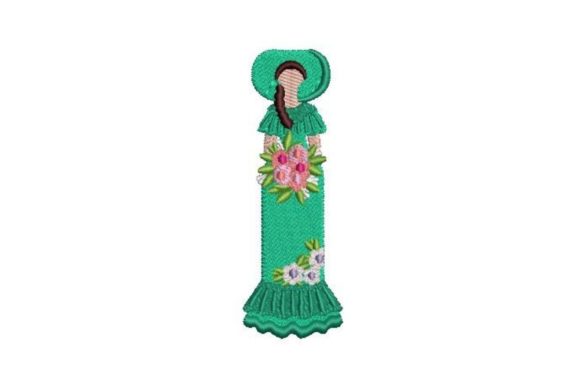
As an embroidery designer who’s prepped over 200 craft fair booths—from Brooklyn bazaars to Nashville maker markets—I’ll say it straight: Dominican Faceless Doll lands with quiet confidence. It’s not bold or festive. It’s not rustic or farmhouse. It’s delicate, fresh, and quietly evocative—a subtle nod to cultural storytelling without literal representation. That facelessness? It’s intentional design restraint—not a limitation, but an invitation. Customers pause. They lean in. They ask, “What’s the story behind that?” That’s gold at a crowded craft fair.
Where Dominican Faceless Doll Shines On Real Products
This machine embroidery design thrives where softness and intentionality matter most. Here’s how it performs across your core craft fair lineup:
- Tote bag design: Stunning as a centered 4–5" motif on natural canvas or unbleached cotton. The clean lines hold up beautifully at mid-scale—neither lost nor overwhelming.
- Apron embroidery: Perfect above the pocket or subtly along the hemline. Its minimal silhouette reads clearly even when viewed from across a booth aisle.
- Tea towel embroidery: Ideal for the lower corner of a linen or waffle-weave towel. The “delicate” quality translates directly to tactile elegance—no competing with texture.
- Embroidered patch: Highly effective at 2.5–3". Clean edges, moderate stitch density, and no tiny interior details mean it irons cleanly and holds shape after washing.
- Fabric pouch & pillow cover: Works as both a singular focal point (centered front) or a repeating border element. Its balanced negative space prevents visual fatigue in multiples.
- Caps & curved surfaces: Use caution—test first. The design’s gentle curves adapt better than angular motifs, but avoid placing it across the crown seam unless you’ve verified hoop clearance and fabric stretch.
What Buyers Actually Notice—And Why It Sells
In person, Dominican Faceless Doll stands out because it feels curated, not mass-produced. At a glance, it reads as handmade product with intention—not just decoration. That perception lifts perceived value instantly. I’ve watched shoppers bypass flashier designs to linger over pieces featuring this motif, especially when stitched in tonal ecru-on-ivory or charcoal-on-oatmeal thread colors. It signals care, heritage awareness, and modern minimalism—all in one stitch.
For Etsy sellers and small shop product listings, it photographs exceptionally well: crisp contrast, no glare-prone dense fills, and strong silhouette definition. Pair it with a printable mockup showing three fabric bases (linen, canvas, chambray), and your conversion rate climbs. It also strengthens brand consistency for makers in the Around The World category—offering cultural resonance without cliché.
Production Reality Check: What You Must Test Before Booth Day
Don’t assume “delicate, fresh look” means effortless execution. As a working embroidery designer, here’s my non-negotiable checklist before cutting fabric:
- Test on scrap fabric matching your final base—especially for textured tea towels or thick denim tote bags. Stitch density can shift dramatically.
- Check thread contrast on dark fabric. This design relies on form, not color pop—so low-contrast threads (e.g., heather gray on charcoal) may disappear entirely.
- Review spacing and hooping. If your digital embroidery file includes tight internal curves or narrow connecting stems, confirm the hoop size allows full stabilization—no floating elements.
- Inspect stabilizer needs. Light to medium cutaway works best for most applications; skip tear-away on towels or loosely woven fabrics—it won’t support delicate outlines.
- Create at least one real mockup—not just a digital preview. Drape it on your actual tote bag or apron. Does it sit flat? Does the scale feel right beside your other craft fair products?
- Compare fabric colors side-by-side. A cream thread on oatmeal linen reads warm and cohesive; the same thread on off-white cotton can look washed out.
- Confirm commercial licensing before selling finished products. Since this is a machine embroidery design marketed for handmade use, verify whether your license covers resale of physical embroidered goods—not just personal use.
Careful-Use Notes: Where Clarity Fades
Dominican Faceless Doll isn’t built for micro-scaling. Avoid using it smaller than 2" wide—delicate lines blur, especially on terry cloth or looped kitchen towels. Tiny interior details (if present in your embroidery file) will vanish on thick fabric or under heavy stabilizer. Also note: on curved cap surfaces or tightly gathered pillow corners, the faceless silhouette may distort unless digitized with stretch compensation. And if your version includes fine linework or narrow stem connections, expect higher thread breaks on high-speed commercial embroidery machines—slow down or reinforce tension settings.
Final Verdict for Craft Fair Sellers & Creative Entrepreneurs
This is a booth-strengthener. Not a headline-grabber—but a trust-builder. Dominican Faceless Doll adds quiet sophistication to your lineup of handmade product, helping your table feel intentional rather than eclectic. It’s repeatable for batch production (no fussy alignment or multi-hooping), scales reliably across product types, and supports storytelling without words—a huge advantage when customers are scanning quickly. For Etsy sellers and digital sellers alike, it’s a versatile design asset: pair it with simple typography in listings, use it across seasonal collections, and lean into its “Around The World” roots without leaning on stereotypes.
If you’re building a recognizable embroidery brand—one where every stitch reinforces quality, culture, and calm confidence—Dominican Faceless Doll belongs in your core collection. Just remember: test, tweak, and treat it like the thoughtful piece it is. Not every machine embroidery design earns that kind of attention. This one does.