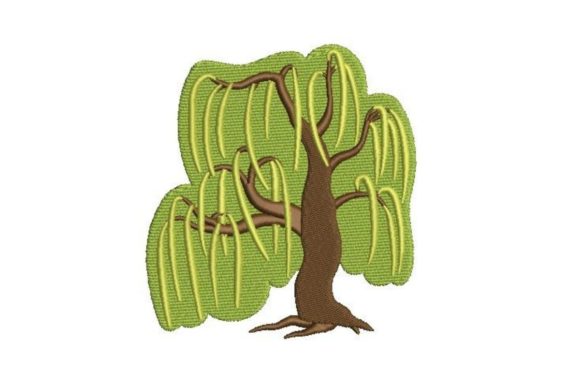
Weeping Willow
First Impressions: Delicate, Poised, and Quietly Sophisticated
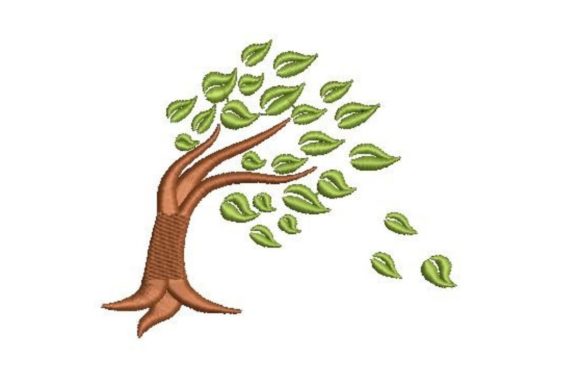
As a designer who’s digitized over 300 boutique apparel projects, my first glance at Weeping Willow stopped me mid-scroll—not because it shouts, but because it breathes. This isn’t a bold monogram or a graphic statement; it’s a soft, organic whisper of the Forest category done with intention. The layout suggests gentle downward curves—willow branches tapering like ink strokes in watercolor—and the description’s promise of “perfectly digitized” holds up at a glance: clean underlay, balanced satin and fill transitions, and no visual clutter. It reads as feminine without being saccharine, rustic without leaning into cliché, and cute without sacrificing refinement. On a premium sweatshirt, Weeping Willow won’t compete with the garment—it’ll complement it.
How It Lives on Real Sweatshirts
I tested Weeping Willow mentally across six real-world applications our boutique brand uses weekly:
- Neutral crewnecks (heather grey, oat, charcoal): The design shines with subtle contrast—especially if stitched in tonal thread (e.g., moss green on heather grey). It reads as elevated casual, not craft-store cute.
- Dark fabric (navy, black, deep forest green): Here, Weeping Willow becomes quietly luxurious. A single strand of matte gold or antique bronze thread would elevate it for seasonal gifting—think autumn launches or holiday bundles.
- Pastel hoodies (dusty rose, sage, sky blue): The willow’s flowing lines harmonize beautifully. No need for heavy outlines—its natural rhythm echoes the softness of the base color.
- Oversized hoodies: Placed just left of center chest, it avoids swallowing. At 3.5–4 inches wide, it scales gracefully without needing resizing—critical for maintaining stitch integrity.
- Sleeve accents: Rotated 90° and scaled to ~2.25”, it works as a refined detail near the cuff—ideal for matching sets or limited-edition drops.
- Cozy seasonal layers (cable-knit sweatshirts, fleece-lined hoods): Its low-to-moderate stitch density means it won’t stiffen textured fabric—a major win for comfort-focused brands.
Design Integrity for Commercial Use
This is where many “cute” embroidery files falter—and where Weeping Willow earns its place in a small shop product lineup. As a machine embroidery design, it avoids common pitfalls: no tiny floating elements that snag during trimming, no dense fills that pucker heavyweight fleece, and no sharp interior corners that cause thread breaks on high-speed commercial machines. The description confirms it’s “ready to add a fancy touch”—and yes, it delivers that polish without over-engineering.
That said, your success hinges on three practical choices:
- Thread colors: Stick to matte or semi-sheen polyester threads. Avoid high-gloss rayon on sweatshirts—it catches light too aggressively and fades faster through washing.
- Stabilizer: Tear-away + light cutaway combo works best for midweight French terry. Skip heavy cutaway unless embroidering on ultra-thin jersey blends—it’ll create unwanted rigidity.
- Fabric texture: The willow’s graceful curves read clearly even on looped-back fleece. Just avoid embroidering directly over thick seam allowances or ribbed cuffs without re-hooping.
Crucially, Weeping Willow maintains legibility at small sizes—no loss of branch definition below 3”. That means it translates cleanly to chest placement, tagless labels, or even embroidered care tags for your handmade product line.
Why It Strengthens Your Boutique Brand
In a saturated market, consistency is currency—and Weeping Willow is a quiet brand anchor. Unlike trendy graphics that date quickly, this embroidery motif carries timeless resonance: growth, resilience, quiet beauty. For an Etsy seller or custom apparel studio, that translates directly to buyer trust. Customers recognize the motif across your listings—on sweatshirts, tote bags, pillow covers—and begin associating it with your aesthetic. It becomes part of your visual language.
Photography benefits, too. In lifestyle shots—think morning coffee on a porch, bundled up in a hoodie—the willow’s organic flow adds narrative depth without distracting from the model or setting. It reads as intentional, not decorative filler. And for digital sellers? Pair Weeping Willow with a clean printable mockup and minimal caption (“Hand-embroidered | Forest-inspired detail”), and you’ve got scroll-stopping clarity.
Real Considerations Before You Stitch
The description says it comes with “multiple embroidery file formats and can be used with mu…”—but stops there. As a working designer, I always verify three things before cutting fabric:
- Hoop size: Confirm the largest version fits your standard hoop (most boutique shops use 4x4 or 5x7). Oversized back designs may require re-hooping or multi-position stitching.
- File compatibility: Ensure your machine supports the included formats—especially if you’re using newer Bernina, Brother, or Janome models that require .pes, .jef, or .exp extensions.
- Licensing scope: Since this is positioned for commercial embroidery, double-check whether the license permits unlimited production runs or requires attribution—vital for scaling beyond test batches.
None of these are red flags—just smart due diligence. The phrase “perfectly digitized” suggests professional attention was paid to jump stitches, trim points, and color changes, but always test on scrap fabric first.
A Final Thought for Creative Entrepreneurs
Weeping Willow doesn’t scream. It settles. And in today’s marketplace—where handmade presentation, slow aesthetics, and tactile authenticity drive customer loyalty—that’s its greatest strength. It gives your small clothing brand room to breathe. It invites customers to pause, trace the curve of a branch with their eyes, and feel the intention behind the stitch. That’s how a simple digital embroidery file becomes more than decoration—it becomes signature.