Hipster Gerbil: A Designer’s Real-World Embroidery Review
First Impressions: Quirky, Clean, and Surprisingly Versatile
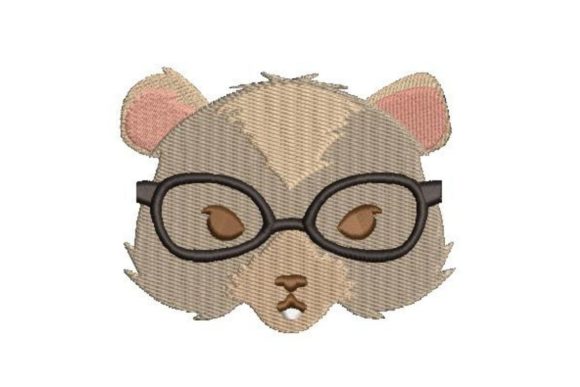
When I opened the Hipster Gerbil embroidery file, I wasn’t expecting to smile—but I did. It’s got that rare balance: playful without being cutesy, stylized without losing character. The gerbil wears round glasses, a tiny scarf, and stands with quiet confidence—not cartoonish, not overly detailed, but full of personality. As a designer who tests dozens of woodland animals each season, I immediately saw its fit: not for hyper-realistic nursery art, but for handmade products where charm meets craft integrity. It feels like a design made *for* people who appreciate wit in their stitching—not just decoration, but conversation.
A Real Project Test: Embroidering a Linen Tea Towel for a Local Boutique
Last week, I used Hipster Gerbil on a natural linen tea towel—part of a small batch for a neighborhood kitchen boutique. Why this project? Linen’s slubby texture tests clarity, and tea towels get washed constantly, so stitch density and thread choice matter. I paired it with medium-weight cutaway stabilizer and 40-weight cotton thread in charcoal and cream. The result held up beautifully: the satin stitch on the glasses frames popped cleanly, the fill stitch in the body stayed smooth (no puckering), and the running-stitch whiskers added subtle movement without vanishing in the weave. Customers loved it—not just as a functional item, but as a lighthearted signature piece. That tells me Hipster Gerbil works best where handmade authenticity matters more than sterile perfection.
Where It Shines (and Where It Needs Care)
Hipster Gerbil is a strong candidate for:
- Custom apparel: Especially on sweatshirts and structured tote bags—the shape holds well on mid-weight fabrics with minimal stretch.
- Embroidered patches: Its clean outlines and balanced negative space make it ideal for iron-on or sew-on patches. No tiny interior details that vanish when cut.
- Baby embroidery: On organic cotton onesies or burp cloths—its gentle humor reads as sweet, not ironic, to new parents.
- Holiday embroidery: Think “ugly sweater” motifs or gingerbread-style kitchen towels—adds levity without clashing with seasonal themes.
- Etsy seller assets: Works well in printable mockups and digital previews. Looks equally strong in black-and-white line art and full-color renders.
But proceed thoughtfully with:
- Thin or stretchy fabric: Like lightweight knits or rayon challis—test stabilizer layers first. The design’s moderate stitch density can pull delicate weaves if under-supported.
- Dark fabric backgrounds: The subtle shading in the gerbil’s fur relies on tonal contrast. On deep navy or charcoal, consider lightening thread colors slightly—or switch to a higher-sheen thread for definition.
- Curved surfaces (caps, curved pillow fronts): The gerbil’s upright posture helps, but avoid placing it too close to seams or crowns where distortion occurs.
- Frequent-wash items: While the stitch layout is durable, always check that satin-stitched elements (like the glasses) aren’t over-dense—excess density can stiffen and crack over time.
Design Integrity Meets Commercial Practicality
What makes Hipster Gerbil stand out isn’t just its theme—it’s how it supports your credibility as a designer or small business owner. When customers see this on a custom apron or baby blanket, they don’t just register “cute animal.” They sense intention: thoughtful scale, balanced spacing, and a visual rhythm that says, “This was designed *for embroidery*, not adapted from clip art.” That builds trust—especially for Etsy sellers listing personalized gifts or craft fair vendors pricing handmade products at premium rates.
It also reinforces brand consistency across collections. Paired with other Woodland Animals, Hipster Gerbil anchors a cohesive aesthetic—whimsical but grounded, modern but warm. That cohesion pays off in repeat buyers, bundled listings, and social media recognition (“Oh, that’s your gerbil series!”).
Designer Notes You’ll Actually Use
Before stitching your first Hipster Gerbil project, do these five things:
- Test on scrap fabric—same weight, same finish, same stabilizer combo you’ll use for the final piece.
- Check thread color contrast on both light and dark fabric swatches. What reads clearly on white may disappear on oatmeal.
- Review stitch density visually in your embroidery software. Look for tight clusters—especially around the scarf ends and glasses temples—that could benefit from slight digitizing tweaks.
- Confirm hoop size compatibility. If you’re using smaller hoops (e.g., 4x4"), verify no critical detail falls outside the active stitching area.
- Inspect small details at actual size: Are the whiskers legible? Does the scarf pattern read as texture, not noise? Zoom in—then step back.
And one non-negotiable: Always confirm licensing terms. Since this is a machine embroidery design marketed for commercial use, double-check whether resale of finished products is permitted—and whether digital redistribution (e.g., bundling with other embroidery file packs) is allowed. Don’t assume.
Final Thought: Not Just a Design—A Craft Business Asset
Hipster Gerbil won’t replace your core monogram or classic florals—but it fills a specific, valuable gap: joyful, ownable, and quietly sophisticated. It’s the kind of embroidery project that draws attention at a craft fair, earns a second look in an Etsy search, and makes a customer snap a photo to share. For small shop owners building a recognizable voice, or designers curating design assets that reflect real personality, it’s more than a woodland animal. It’s a stitch of smart, human-centered craft strategy.